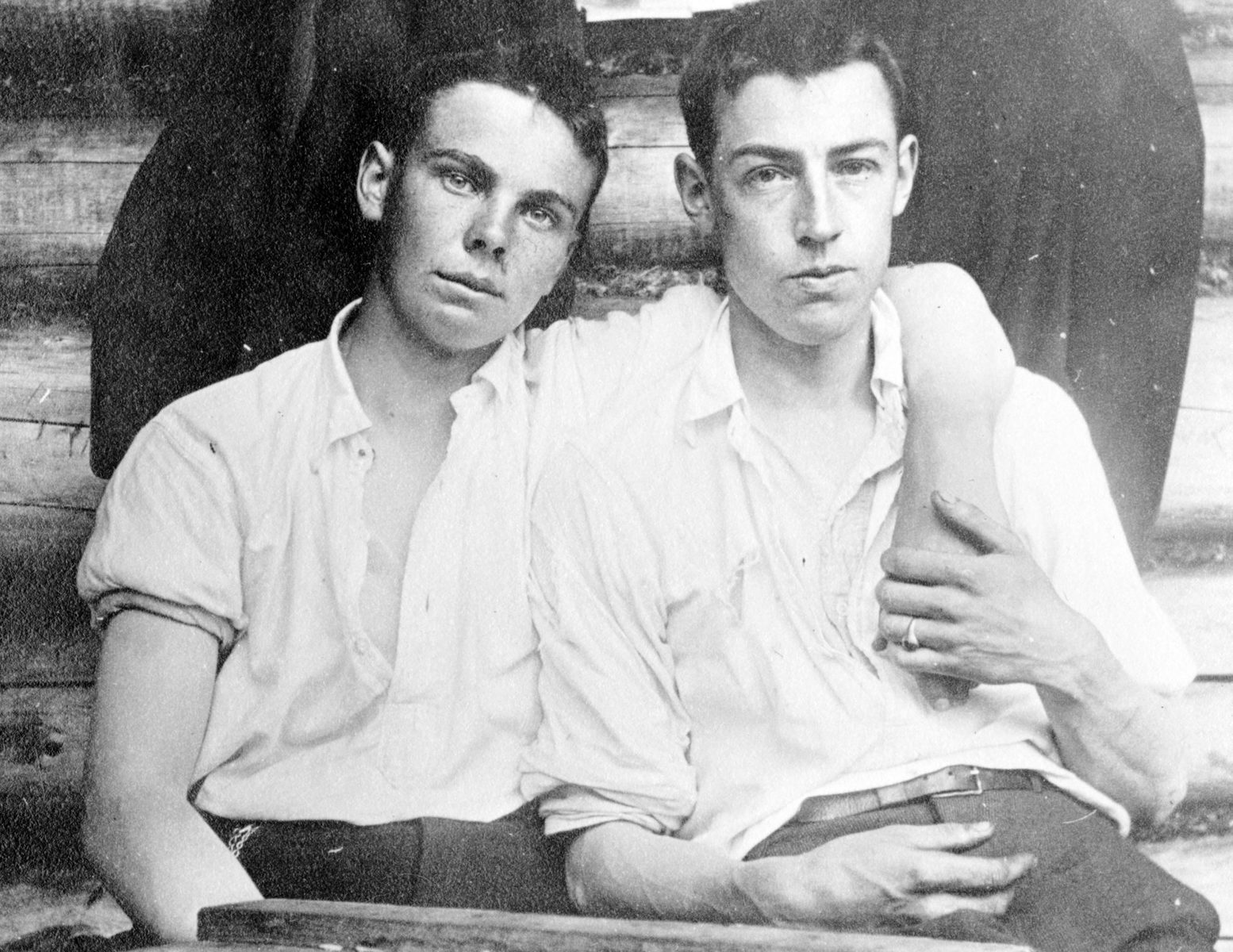
I notice the hand first. Cub has an arm around Len’s shoulders; Len holds his forearm. Their shirts are open at the neck, their sleeves rolled up. Wooden boards form the wall behind them. The exhibition caption places them at Cranberry Lake Camp, around 1916–18. I linger over that meeting of arm and hand. It is the detail I keep looking for in the photographs that follow.
Len was eight years older than Cub. They grew up as neighbours in Butternut Ridge, the New Brunswick village now called Havelock. Leonard Olive Keith and Joseph Austin Coates: the longer names behind the two short ones. Len, born in 1891, worked as a driver before enlisting; Cub, born in 1899, was a mechanic.
Friends and family move through Len’s photographs. There are camping trips and country outings. Cub appears again and again. Sometimes the two men sit close, an arm around a shoulder, a hand on a forearm. His face becomes familiar before much of his life is known to us. We begin to recognise him, to look for him in the next picture.
To be photographed again and again is to occupy space in another person’s attention. In Len’s collection, Cub has that space.
Roy Corey had been Len’s classmate. He told his son John about Len and Cub. Many years later, when John gave the albums to the provincial archives, he carried that remembered history with them. He described the two men as “boyfriends.”
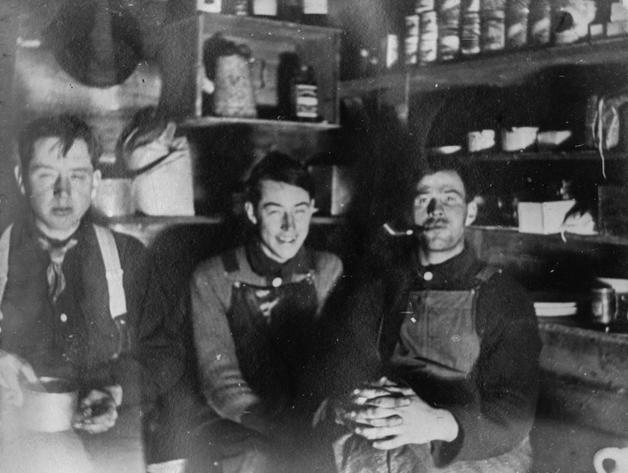
Roy is there in the photographs too, beside Len and Len’s brother Frank, with shelves of tins behind them. There is a small pleasure in finding his face: the man whose remembered account helped identify the relationship, sitting among the people in Len’s pictures.
Then there is Cub beside the family car. He wears a cap; shrubs and trees border the road. Len’s family owned the car, and Len took Cub on country outings. For a moment, we can stay here with the photograph: the road, the open-top car, Cub looking towards the camera.
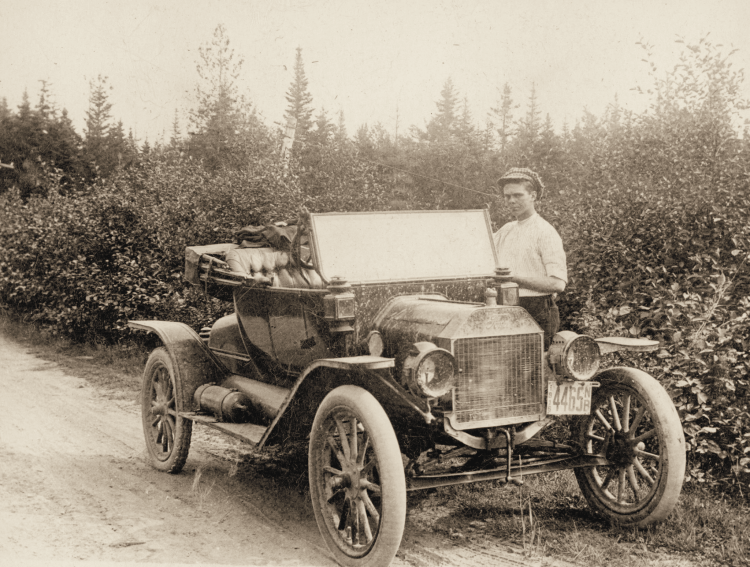
A car and a camera were things Len’s family could afford. One outing took Len and Cub near Jemseg around 1916. There was a way to go beyond the village, and a way to keep something of the journey.
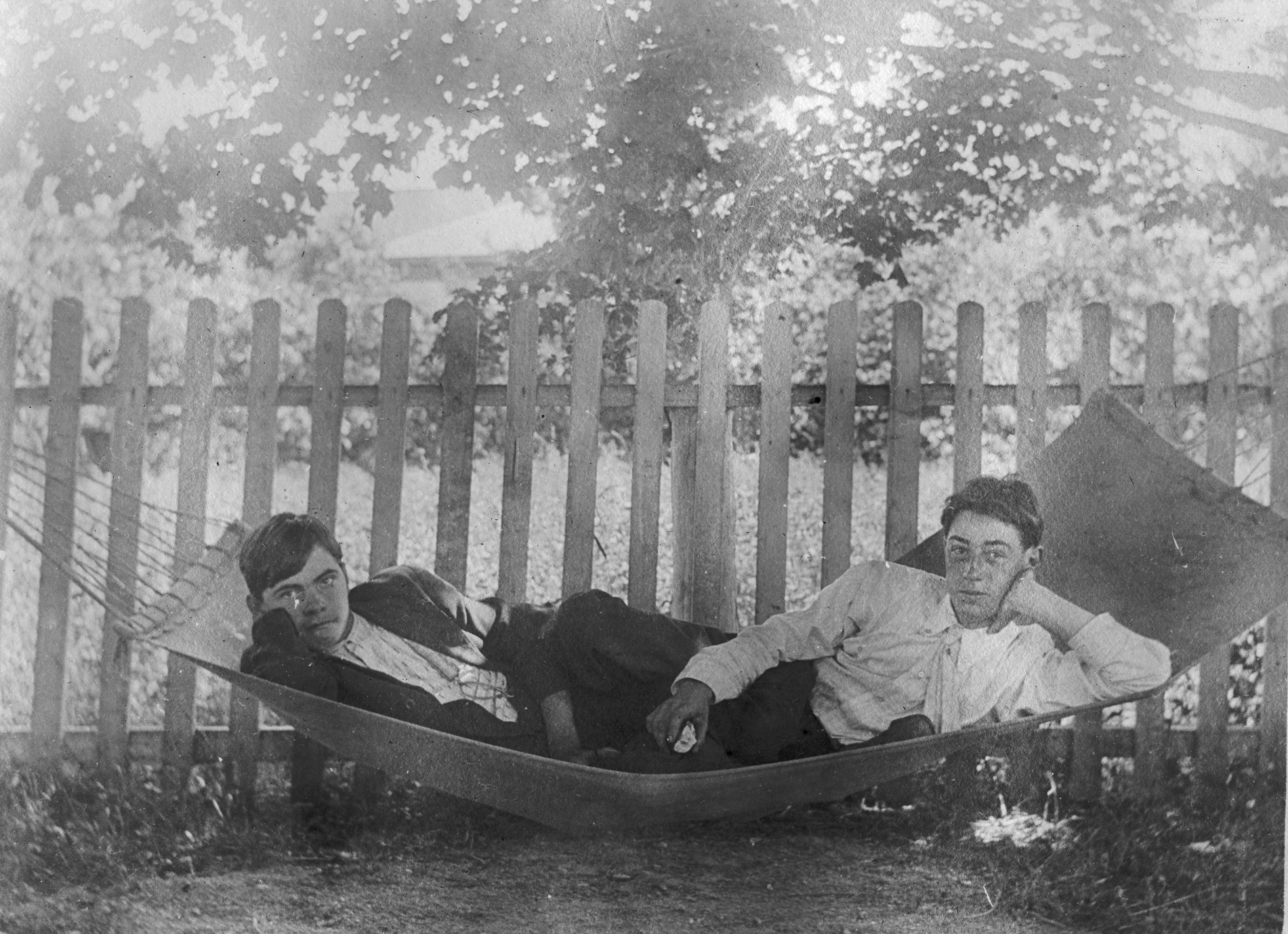
I keep coming back to the hammock.
To the low curve of the fabric, the picket fence behind it, the branches overhead. At the Keith family home, Len and Cub recline at opposite ends. A photograph can preserve so little of a day. Here, it has kept them together.
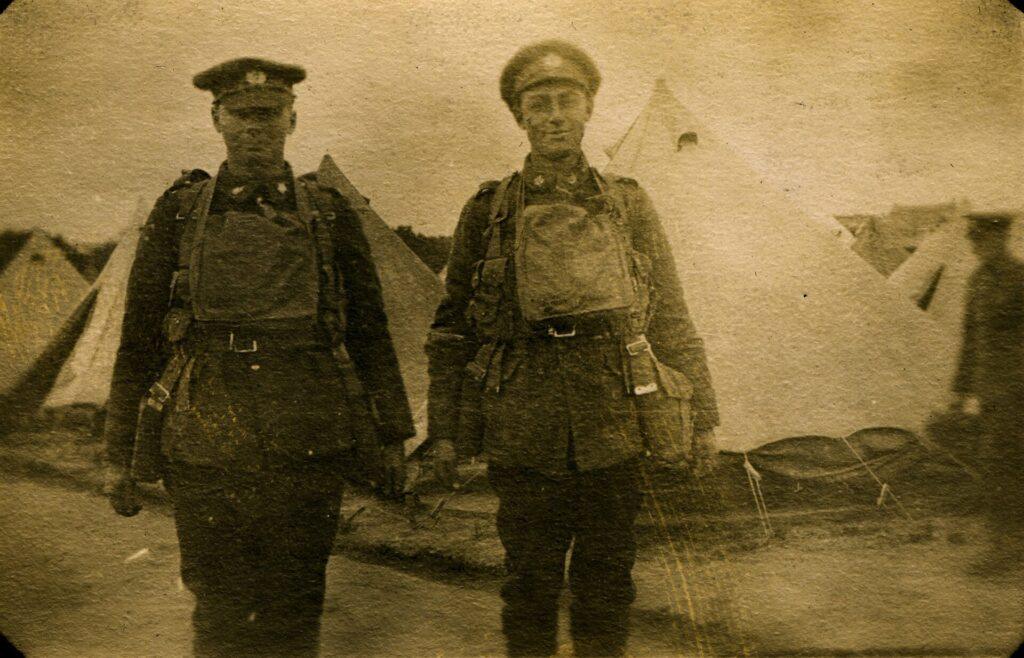
Uniforms enter the photographs too. In 1918, both men joined the Canadian Engineers and served overseas during the First World War. The photograph from their training in Quebec has them standing side by side. By 1919, both were back in Canada.
Back in civilian life, Len ran a garage and a pool hall; Cub worked with him at the garage. Look at them in their caps and suspenders, their clothes visibly marked, sleeves rolled. There is plenty for the eye to take in before it finds the hand resting around a bare forearm, near the elbow.
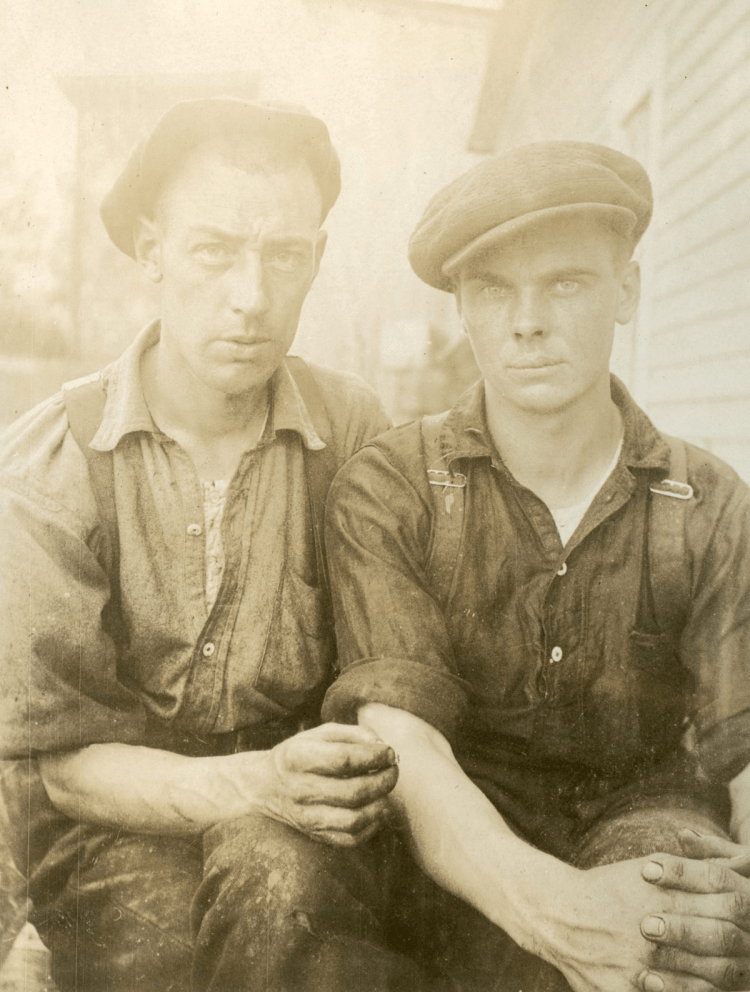
There it is again. Among the work clothes, the caps, the suspenders: the hand. The photograph holds the work and the closeness in the same frame.
Their relationship ended. The surviving material does not give us their own account of what changed. The earlier photographs remain: an arm around a shoulder, two men in a hammock, a hand among the work clothes.
In 1931, Len was outed and forced to leave Havelock. By August, as Dusty Green records in his account of the research, Len had transferred ownership and control of his business to his sister, Lucy.
I find it hard to turn back to the earlier pictures after reading that. The boards behind the two men. The family car. The hammock at home. Places that held a life look different once you know someone was made to leave them.
In an obituary for Len’s mother, dated 1948, Green finds Len in Longueuil, Quebec. It is such a brief way to encounter him again: a name, a place where he was living. Len died in 1950.
Cub married Rita Cameron, a nurse, in 1940. His later life included work as a butcher and a contractor, and involvement in New Brunswick harness racing. He died in 1965. Those years belong to his story too, beyond the younger face we have come to know in these photographs.
Lucy kept the albums after Len’s death. John Corey bought them at a Keith family estate sale in 1984 and donated them to the Provincial Archives of New Brunswick in 2011. Before these pictures reached us, they passed through years of someone’s keeping.
Meredith J. Batt and Dusty Green followed the threads of these lives, bringing records and photographs together in Len & Cub: A Queer History, published in 2022. Their work gives us names and places to set beside the faces, a way to return to the pictures with a little more understanding.
In another photograph, Len and Cub sit among trees, in sweaters worn over collared shirts and ties. A hand rests over a forearm. Both men look beyond the edge of the frame.
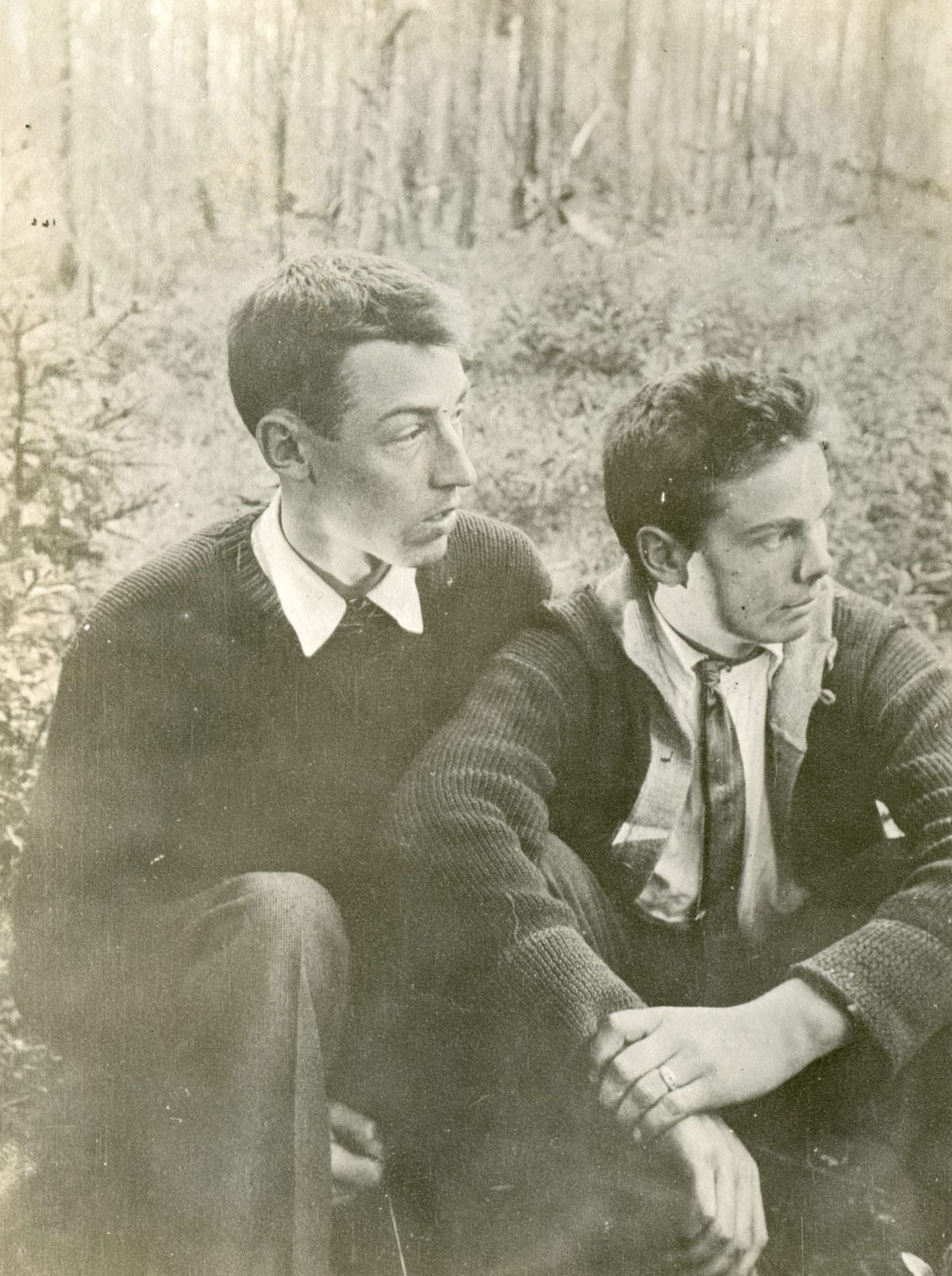
Len’s departure belongs to his story. So does this: the two of them among the trees, close enough for that hand to rest there. I don’t want to hurry past it.
Return to the first photograph. To Cub’s arm around Len’s shoulders, and Len’s hand holding his forearm. Stay there a moment.
I cannot hear what they said. I can see how close they sat.