I like arriving at the part about the house. There has been so much loneliness in the earlier pages, and then Ger is writing about decorating. She has a lover, Hetty, and a friend, Rora. The three women are making a home together. A letter has room for this kind of news: the news you want someone far away to know because it changes the shape of your days.
We meet Ger van Braam through letters preserved in Letters from Ger, an exhibition by Queer Indonesia Archive. She writes from Jakarta to Barbara Gittings, the American editor of the lesbian magazine The Ladder. Their correspondence takes us through 1963 and 1964, through isolation, friendship, love and, eventually, preparations to leave the country where Ger was born.
It is a small stretch of a life. Yet there is so much happening inside it.
In November 1963, Ger thanks Barbara for publishing her short story. She had sent it as an expression of gratitude, without expecting to see it in print. English is a language she worries about using well enough. On the page, she is direct, searching, sometimes impatient with herself. She wants Barbara to understand how difficult it has been to find other women like her.
She describes going to the airport and watching women pass through. She is shy about approaching anyone. Books offer another way of meeting lives beyond her own, although imported reading material is difficult to obtain. She wonders whether the companionship she encounters in novels exists outside their pages.
I recognise something in that question. You can know what you want and still need to see that someone else has managed to live it. A story can give a desire a place to go, somewhere beyond the boundary of your own experience.
Ger had married a man and left the marriage after three months. In her account, reading The Well of Loneliness and The Price of Salt helped her understand herself. Her family disowned her. Leaving brought freedom, she tells Barbara, but nobody was waiting for her at the other end of it.
That last detail stays with me. There are decisions we tell as turning points, as though the moment of choosing contains everything that follows. Ger lets us see the open space afterwards: having left, having chosen, still needing someone to know.
Barbara does not answer quickly. Her reply, dated 25 April 1964, acknowledges the delay. Ger’s letter had left her struggling to find a response. She had shared it with colleagues and wanted permission to publish portions for the magazine’s readers. An anonymous American woman college professor would renew Ger’s subscription.
The reply also thanks Ger for artwork she has sent. Barbara asks about her work, her circumstances and what else she might need. I’m touched by the practical questions. Someone has read the loneliness and begun to ask how to help.
By Ger’s next letter, there is different news.
She has made friends with Rora, who works for Shell. They have taken a room together. Rora introduces her to gay friends, and at a party Ger meets Hetty. The attraction becomes a relationship. Hetty is married and has a young son; leaving her marriage carries consequences. Ger describes Hetty telling her husband the truth and leaving the marriage. Her son stays with his father, and she continues seeing him.
Ger’s telling is full of excitement. I find myself slowing down here, aware that we have her account, and that Hetty’s own words are missing. The joy is real on Ger’s page. The decisions around it belong to several lives, each larger than the portion we can read.
Rora remains their friend. Ger is clear about that distinction: the household brings together a couple and a friend, three people whose companionship has changed her sense of being alone. They are arranging their accommodation and hoping for a place of their own. Later correspondence describes Ger and Hetty decorating their home.
There is no inventory of the furniture for us to reconstruct. I would like to know what they chose, what they kept, which things made the rooms feel theirs. What survives is the act itself: they were making somewhere to live.
Ger also has a living to earn. She tells Barbara about her range of training, from office skills to art, and about joining her brother-in-law’s export business. Work and money sit beside love in the correspondence. Independence has material conditions. Rent must be paid, letters sent, books obtained. A home needs more than the wish for one.
In another May letter, Ger corrects the impression that her estrangement from her family lasted indefinitely. She had returned after a year away. Her mother had worried; her family accepted her back. Living with a sister, she found space to conduct her personal life without questions. When Rora, and then Hetty, came into that life, her sister did not interfere.
I appreciate the correction. It makes room for a family relationship that changed, without requiring us to turn it into complete understanding. Sometimes the room someone leaves you is itself a form of accommodation.
Ger’s circumstances also require care. She was born in the city then called Batavia, now Jakarta, to a family of mixed Indonesian and European ancestry. The exhibition places the family’s wealth and education within the hierarchies of Dutch colonial rule. Her letters carry class and racial prejudices too. Her loneliness deserves our attention; it does not make her account a neutral description of everyone around her. We are reading one woman, with the opportunities and limitations of her own position.
Across these pages, the request for books keeps returning.
In August, Barbara proposes asking The Ladder’s readers to contribute to a book fund. She and her partner Kay have books to send as well. She asks about customs and whether deliveries could create trouble. Before a parcel can arrive, there are questions of safety, postage and how to get it through.
Ger wants the books to travel beyond her own hands. In her response, she talks about sharing them with friends and with a sister who is the head of a convent. Reading had helped her find words for herself. Now she wants other people to have time with those words, to think things through at their own pace.
A book passed on after reading: I love how modest that action can look from outside. You finish it, remember someone, offer it. You may never know which sentence they will carry away. Ger could not know that either. Her letters hold the wish that something useful might reach another woman.
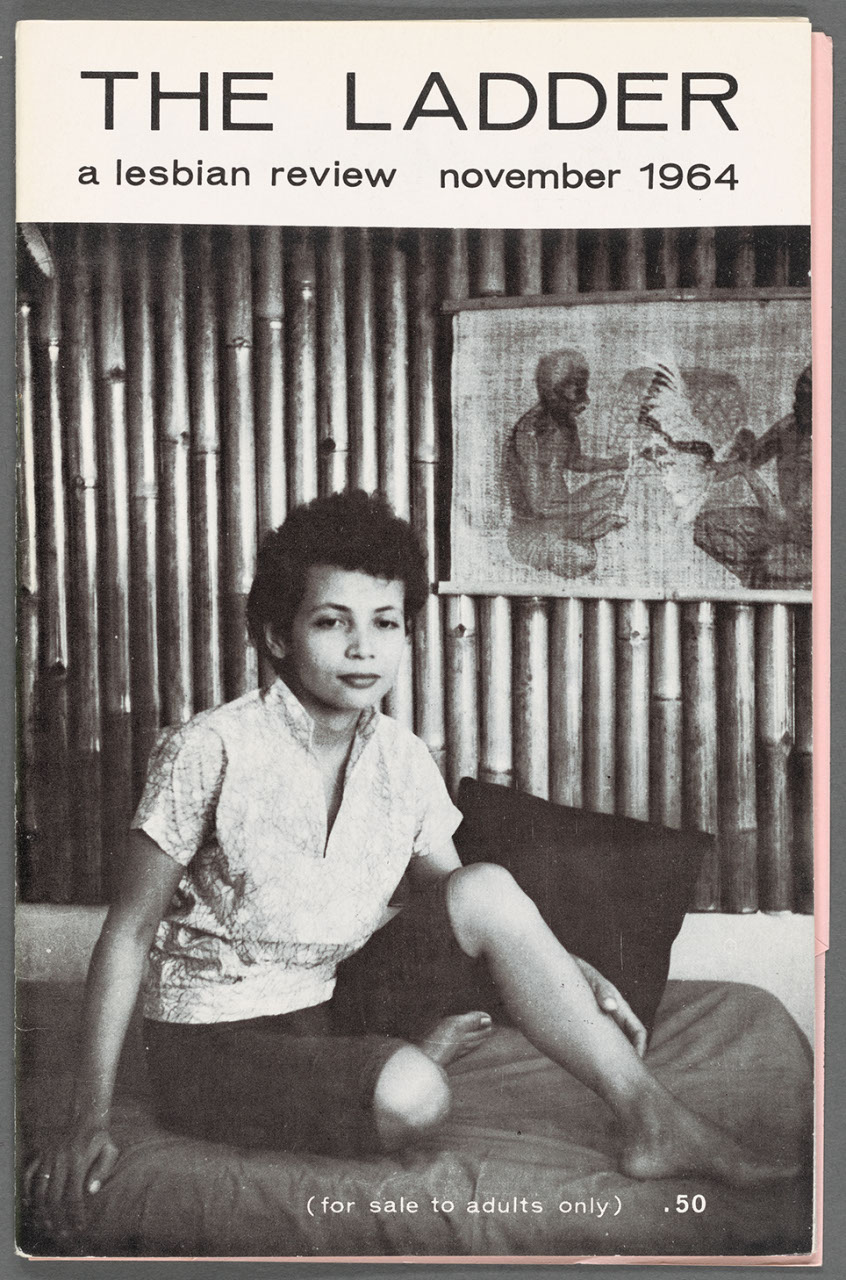
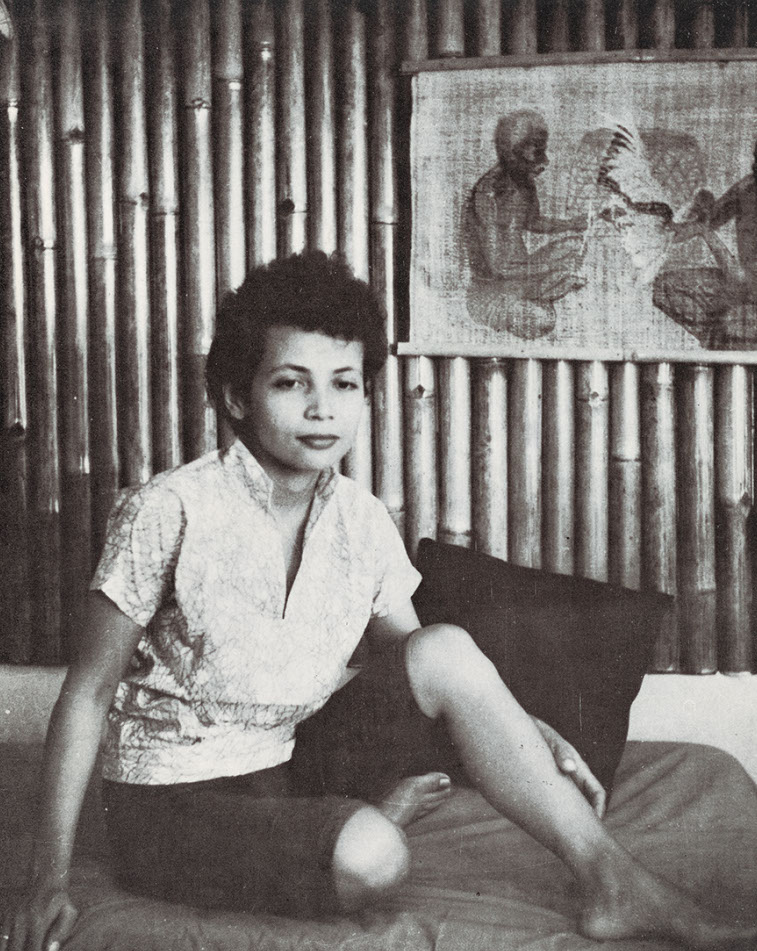
There is a face to place beside the letters. Rora photographed Ger in 1963, and the portrait appeared on the November 1964 cover of The Ladder. Ger had agreed to its publication after Barbara asked. In the image, she sits on a bed, one knee raised, a framed picture behind her. She looks a little beyond the camera. I return to the letters with that face in mind.
The house in Jakarta is not where the correspondence leaves her.
On 25 October 1964, Ger writes urgently: she, Hetty and Rora are preparing to go to the Netherlands. She asks Barbara to hold her mail until she can provide another address. Ger plans to travel as a visitor on her Indonesian passport, joining Hetty. She says plainly that she does not want to lose her and return alone. The timing and their future arrangements are still unsettled.
By the final letter presented in the exhibition, Rora has already left. Ger and Hetty are preparing to follow. Ger still hopes to get books to her friends in Indonesia. The life she is leaving has people in it now, people she wants to remain connected to.
The exhibition does not give us a settled account of the women’s lives together afterwards. I wish we could follow them further. For now, we have this interval: the woman who wrote that she could find nobody, then wrote again with names, a relationship, a home to decorate and books she wanted to share.
I go back to the house. To the small domestic news that can seem too ordinary to keep, until years pass and we are grateful somebody put it in a letter.
Ger wanted Barbara to know. Now, because the letters were kept, we can know something of it too.